
| Sandra Ikegwuruka
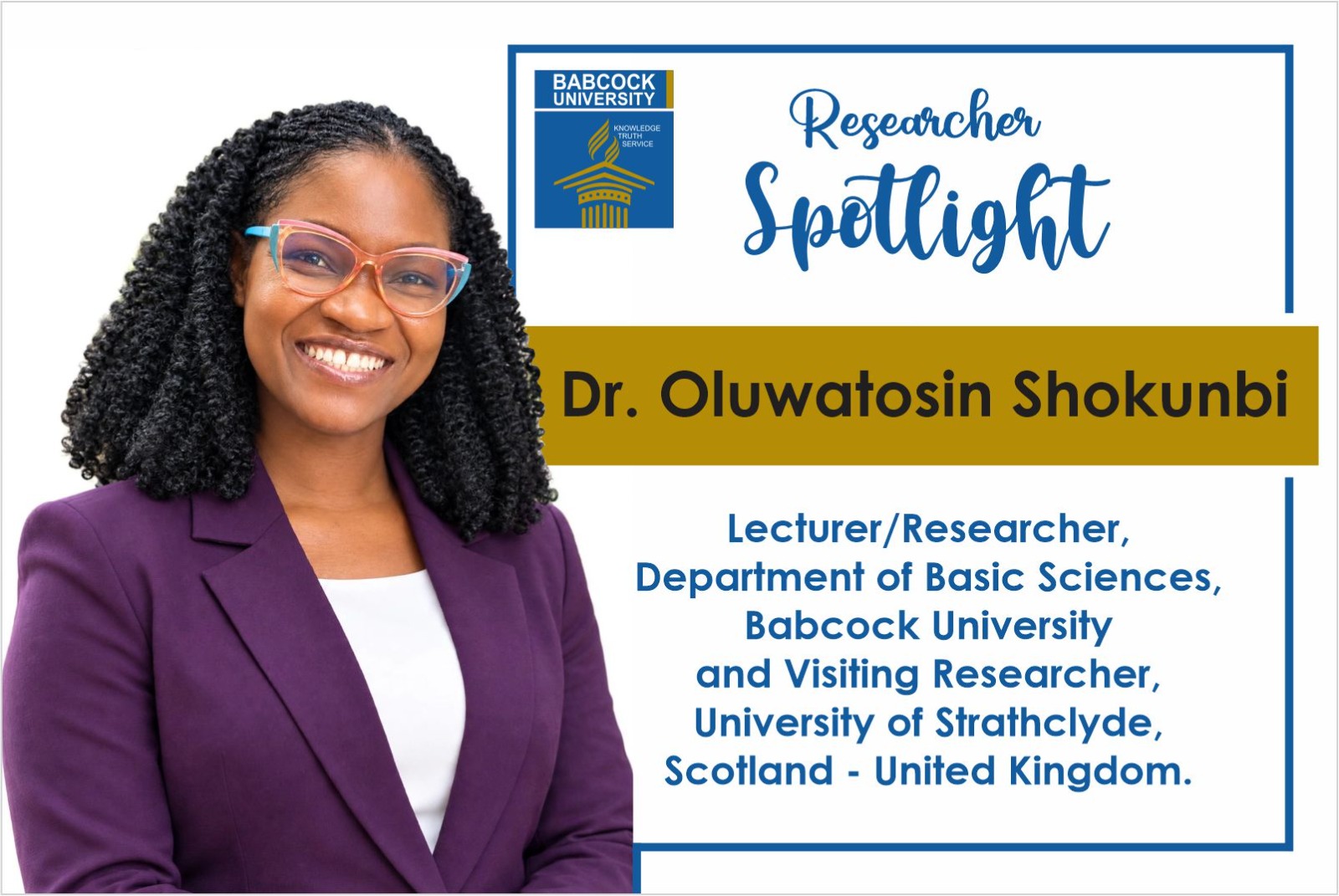
What if agricultural waste could help remove some of the pollutants hiding in our water? This is the possibility Dr. Oluwatosin Shokunbi is exploring through research that combines environmental chemistry, sustainable materials and water treatment.
A researcher in Environmental Chemistry and Toxicology in Babcock University's Department of Basic Sciences, Dr. Oluwatosin Shokunbi investigates emerging contaminants, including microplastics, potentially toxic elements and per- and polyfluoroalkyl substances (PFAS), in water, food, sediments and aquatic environments.
Her research has identified microplastics in drinking water in Ogun State, bottled water in Southwest Nigeria, commercial table salt, river sediments and Lagos beaches. Now, she is exploring how agricultural residues, particularly rice husks and orange peels, can be converted into porous carbon materials for capturing microplastics in treated wastewater.
The idea is both practical and promising: transform agricultural waste into a potential resource for cleaner water while generating evidence to address environmental contamination and protect public health.
In this edition of Babcock University Researcher Spotlight, Dr. Shokunbi discusses the discoveries driving her research, the possibilities of sustainable water treatment, and how her work contributes to environmental protection, public health and the Sustainable Development Goals.
Inside the Research: A Conversation with Dr. Oluwatosin Shokunbi
1. What are you currently researching?
My research focuses on emerging environmental contaminants, particularly microplastics, per- and polyfluoroalkyl substances (PFAS) and potentially toxic elements in water, sediments, food and aquatic organisms. My current project explores the development of porous carbon materials from agricultural residues, especially rice husks and orange peels, to capture microplastics in treated wastewater.
2. What problem inspired you to pursue this research?
Pollutants that people cannot see, such as microplastics, are increasingly being detected in the water we drink, the food we eat and the rivers and beaches we depend on. There was limited information about how widespread these pollutants were in Nigeria and the risks they might pose. That knowledge gap inspired me to investigate these hidden contaminants and contribute to developing practical solutions.
3. What have you discovered so far?
My research has identified microplastics in several everyday environmental and consumer settings, including drinking water in Ogun State, bottled water in Southwest Nigeria, commercial table salt, river sediments and Lagos beaches. I have also assessed the ecological and human health risks associated with potentially toxic metals in soils. My current work further examines how the pore structure and surface chemistry of materials influence their ability to capture microplastics.
4. Why does this research matter beyond the university?
Clean water and safe food affect everyone. My findings provide communities, regulators and policymakers with evidence about environmental contamination and potential exposure. The research also points towards low-cost, sustainable approaches to water treatment, particularly through the use of agricultural waste to develop materials for pollutant removal.
5. Who could benefit from your findings?
The beneficiaries include households and consumers, water treatment operators, environmental and public health agencies, policymakers, farmers and agro-processors whose agricultural waste could become a useful resource. Researchers and students also benefit through the knowledge, opportunities and scientific evidence generated by this work.
6. What has your research journey taught you?
Good science is collaborative and often interdisciplinary. Working across Nigeria, the United Kingdom and other countries through fellowships, training schools and grants has shown me the importance of opportunity, institutional support and international collaboration. It has also reinforced my belief that supporting and empowering young women in science is important for building a stronger research community.
7. If your research succeeds, what could change?
Agricultural waste could become an affordable source of materials for filters that capture microplastics from wastewater, helping to reduce pollution entering rivers and oceans. The evidence from my research could also inform stronger policies on plastics and water quality, while contributing to efforts to reduce public exposure to environmental contaminants.
8. What are the next steps for your research?
I plan to complete the batch and fixed-bed column experiments and validate the developed materials using real treated wastewater. I will also investigate how captured microplastics are distributed within the filter bed and the mechanisms responsible for retaining them. As a Visiting Researcher at the University of Strathclyde, I will continue building international research collaborations to advance this work.
9. In what ways has your research helped Babcock University?
My Babcock-funded research grant, titled Characterisation of Microplastics in Babcock Water Plant and Environs and Their Risk Assessments (BU/RIIC/COC1/007), generates evidence on water safety within and around the university. My research has also contributed to Babcock University's research visibility through international grants, fellowships and publications. I was also a recipient of the Vice-Chancellor's Faculty Research Award.
10. Where can readers find your publications?
Some of my selected publications include:
- Abundance and ecological risk assessment of microplastics in touristic beaches along the Atlantic coast of Lagos, Nigeria.
- Occurrence, ecotoxicology, and clay-based adsorption of ciprofloxacin: A comprehensive review.
- Microplastic occurrence in drinking water in Ogun State, Nigeria.
- Human exposure to microplastic particles in bottled water from Southwest Nigeria.
- Ecological and human health risk assessments of potentially toxic metals in soils.
- Microplastics and potentially toxic elements in sediments of two rivers in Southwestern Nigeria.
- Microplastics and potentially toxic elements in surface sediments of the River Kelvin, Scotland, UK.
- Why Nigeria should ban single-use plastics: Microplastic pollution of the Osun River.
- Microplastic contamination of commercial table salts: A case study in Nigeria.
11. How does your research contribute to the Sustainable Development Goals?
My research contributes to six United Nations Sustainable Development Goals:
- SDG 6 – Clean Water and Sanitation: Developing biomass-derived materials to capture microplastics from wastewater.
- SDG 3 – Good Health and Well-being: Investigating environmental contaminants that may pose risks to human health.
- SDG 9 – Industry, Innovation and Infrastructure: Developing innovative and sustainable materials for water treatment.
- SDG 12 – Responsible Consumption and Production: Converting agricultural waste into useful materials for environmental remediation.
- SDG 14 – Life Below Water: Contributing to efforts to reduce microplastic pollution entering aquatic ecosystems.
- SDG 15 – Life on Land: Promoting responsible waste management and reducing environmental contamination.
Dr. Shokunbi’s research demonstrates how science can turn environmental challenges into opportunities for sustainable solutions. By investigating the potential of agricultural waste to tackle microplastic pollution, she is contributing to the search for cleaner water, healthier communities and a more sustainable environment.
At Babcock University, this is what research that matters looks like; addressing today’s challenges while exploring possibilities for a better tomorrow.
#BabcockResearch#ResearchThatMatters #SDG6 #SDG3 #SDG12 #SDG14