
| Communication, Media and Branding
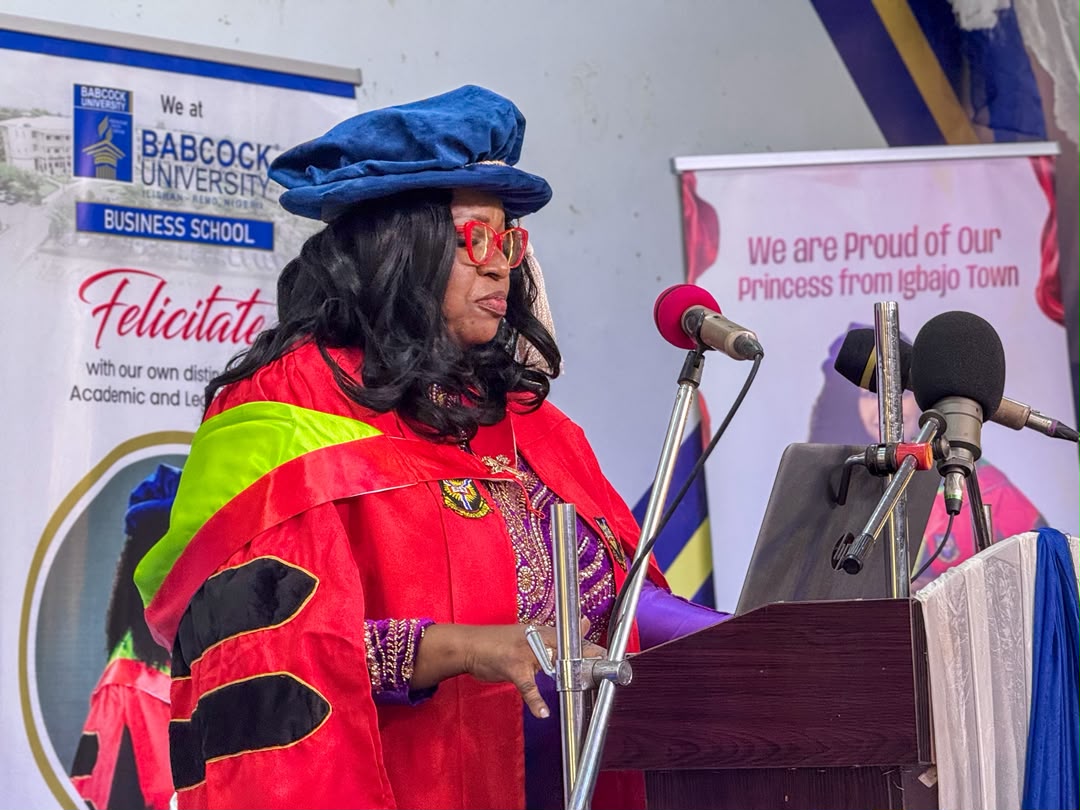
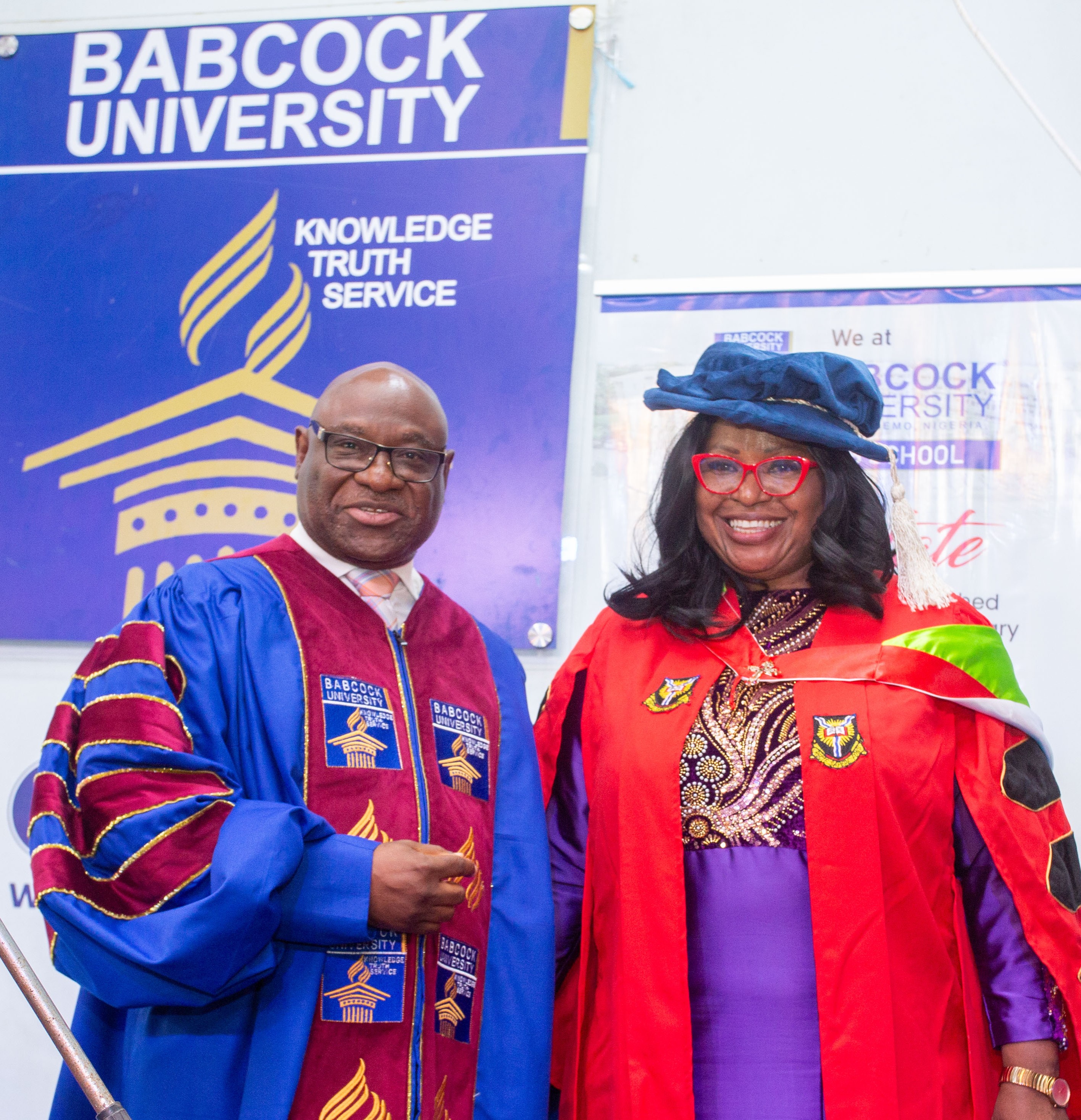




At the University's 63rd Inaugural Lecture, the Professor of Criminal Law calls for reforms to protect vulnerable citizens, strengthen accountability and advance equitable access to justice.
Who protects the vulnerable when justice is compromised, institutions fail and the powerful escape accountability?
This question framed the central argument of Professor Adekunbi Imosemi as she called for comprehensive reforms of Nigeria's criminal justice system, emphasising the need for stronger institutions, greater accountability and equal protection under the law.
Delivering Babcock University's 63rd Inaugural Lecture, titled “The Dangling Pendulums of Lady Justitia: Re-echoing Justice for the Victims, the Criminals and the Law in a Permissive Society,” on November 5, 2026. The Professor of Criminal Law and Criminal Justice Administration examined the legal, institutional and societal challenges that continue to undermine the administration of justice in Nigeria.
Drawing on her research and experience in criminal law, Professor Imosemi used the metaphor of Lady Justitia's unbalanced pendulums to illustrate how justice loses its equilibrium when institutions tolerate wrongdoing, enforcement is selective and the rights of vulnerable citizens are neglected.
Specialised family courts to strengthen protection of vulnerable groups
A major recommendation from the lecture was the establishment of specialised family courts in every state of the federation to handle cases involving domestic violence, child abuse, child marriage and human trafficking.
She also urged states yet to domesticate the Violence Against Persons (Prohibition) Act 2015 to do so, explaining that nationwide adoption would strengthen the legal response to gender-based violence, including sexual violence within marriage.
Citing Lagos State's legislative provisions as an example, she highlighted the importance of laws that recognise sexual violence within marriage as an offence and provide appropriate penalties upon conviction.
These proposals speak directly to Sustainable Development Goal 5 (Gender Equality), particularly the elimination of violence against women and girls, and SDG 16 (Peace, Justice and Strong Institutions), which prioritises the protection of human rights and equal access to justice.
Independent institutions and accountability in public governance
On corruption and governance, Professor Imosemi maintained that the fight against corruption requires anti-corruption agencies that can discharge their responsibilities without political interference.
She advocated genuine institutional independence for the Economic and Financial Crimes Commission (EFCC) and the Independent Corrupt Practices and Other Related Offences Commission (ICPC), supported by security of tenure for their leadership, adequate funding and protection from executive interference.
She further recommended stronger asset declaration mechanisms through public disclosure and independent verification, comprehensive statutory protection for whistle-blowers and an amendment to Section 308 of the 1999 Constitution to exclude economic crimes from the scope of constitutional immunity.
Her recommendations underscore the importance of accountable governance and effective public institutions, central to SDG 16 and its ambition to build transparent, inclusive and accountable institutions.
Reforming criminal justice administration
Addressing operational gaps in the justice system, Professor Imosemi called for the domestication of the Administration of Criminal Justice Act (ACJA) 2015 in all states of the federation.
She also recommended comprehensive training for judges, magistrates, police officers, prosecutors, defence lawyers and correctional officials on the ACJA and the Nigeria Police Force Establishment Act 2020.
She stressed that a well-informed and adequately equipped criminal justice workforce is essential to improving the quality, efficiency and fairness of justice delivery.
The Professor also called for the adoption of the Child Rights Act 2003 by all states, stressing the need for stronger safeguards against child abuse, exploitation and other violations of children's rights.
Beyond strengthening legal protection, these measures advance SDG 10 (Reduced Inequalities) by addressing unequal access to justice and the disproportionate vulnerability of disadvantaged groups.
A correctional system centred on accountability and rehabilitation
Professor Imosemi also called for increased government investment in correctional services, greater accountability among correctional officials and deliberate measures to decongest custodial facilities.
She advocated independent monitoring of correctional centres by civil society organisations and faith communities to strengthen oversight and ensure compliance with established laws and human rights standards.
Her position highlighted the need for a correctional system that balances accountability with rehabilitation and recognises the dignity and rights of persons in custody.
Scholarship that speaks to National Development
Beyond examining the challenges confronting Nigeria's justice system, the lecture demonstrated the role of sustained academic research in identifying policy gaps and advancing practical solutions.
Professor Imosemi's recommendations reflect the intersection of three critical development priorities: SDG 16 – Peace, Justice and Strong Institutions, through institutional accountability and access to justice; SDG 5 – Gender Equality, through stronger protection against gender-based violence; and SDG 10 – Reduced Inequalities, through equitable treatment and safeguards for vulnerable populations.
For Babcock University, the lecture represents the strategic value of research-driven scholarship in addressing societal challenges, informing public discourse and contributing to national development.
As part of the University's commitment to being globally relevant, research-focused and rooted in its values, the inaugural lecture provided an important platform for translating academic knowledge into ideas that can influence policy, strengthen institutions and improve lives.
Ultimately, Professor Imosemi challenged government, legal practitioners and other stakeholders to restore the balance of justice by ensuring that the law protects victims, respects the rights of the accused and holds every offender accountable, irrespective of status or influence.
The message was clear: justice must not be measured by the power of those who seek it, but by the fairness with which it is delivered to all.
#BabcockUniversity #InauguralLecture #JusticeReform #SDG16 #SDG5 #SDG10